Fencing services across London
We install five types of timber fencing across London: closeboard, picket, horizontal batten, overlap panel and decorative panel. We also repair existing fences, replace rotted posts and gravel boards, make good after storm damage, and build matching timber gates. Every job starts with a site visit and a written, itemised estimate.
Install, repair or replace?
Three different jobs, priced differently. Most enquiries turn out to be the second or third once we have looked at the posts.
New boundary from scratch
Setting out the line, digging and concreting posts, then rails, boards and gravel boards. Most of the work is in the ground: post depth and spacing are what the fence stands on, and they are the part nobody sees once it is finished.
Making good what is already there
Storm damage, a snapped post, boards gone at the bottom. Worth doing when the post line is still sound — we match the existing timber where we can, though weathered boards never match new ones exactly, and we will say so before starting. See fence repair and post replacement.
Out and rebuilt in one visit
Old fence removed, concrete footings broken out, new fence built on the same line. Disposal is included. The rough test for whether you need this rather than a repair: push a screwdriver into the base of each post — once about a third of them are soft, staged repairs stop being good value.
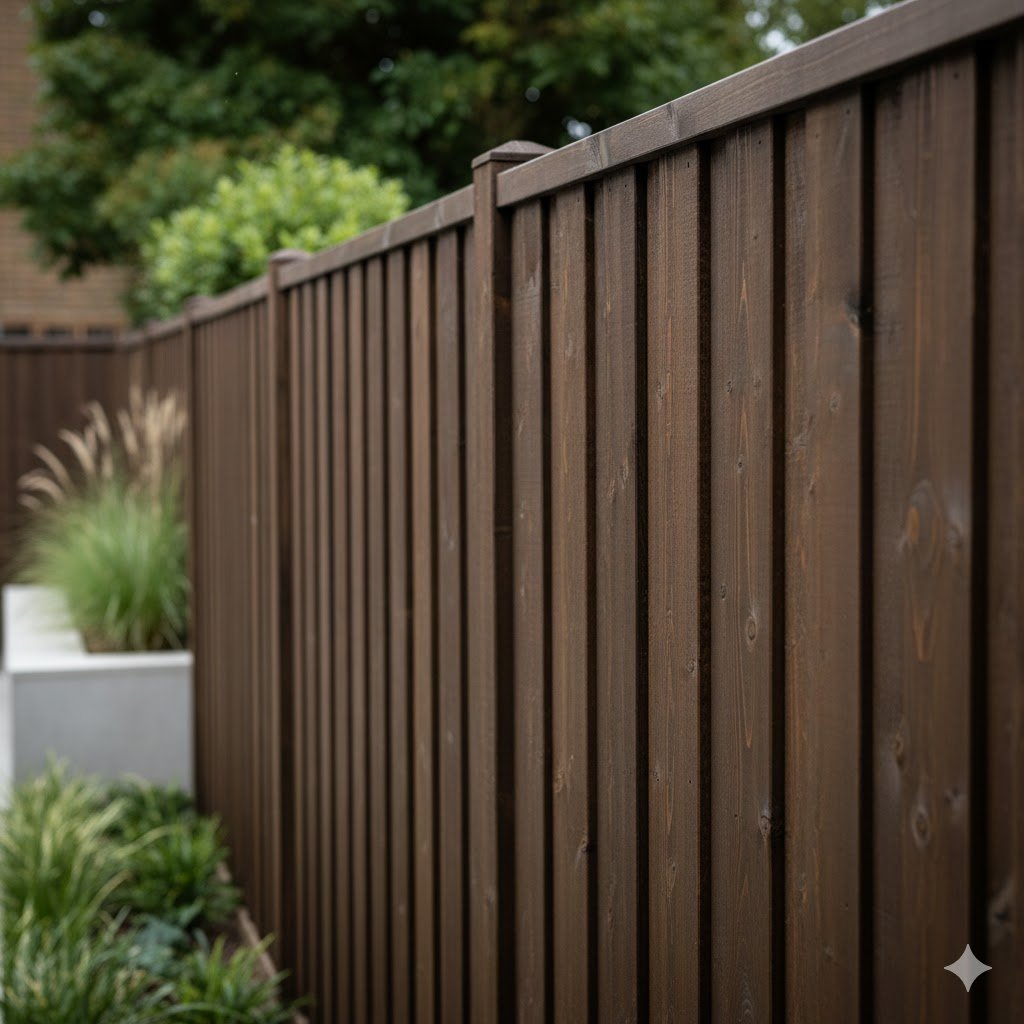
Closeboard fencing
Closeboard, also called featherboard, is built on site: vertical feather-edge boards overlapped on arris rails between the posts. It gives full privacy, copes with wind better than panels, can follow a slope, and a damaged board can be replaced on its own. It is our usual recommendation for back gardens and side returns.
- Full privacy — no gaps between boards
- Copes with wind better than panels
- Height options from 900mm to 1.8m and beyond
- Tanalised pressure-treated timber for long life
- Concrete or timber posts available
- Can be stained or painted to any colour
- Suitable for sloping gardens with stepped or raked installation
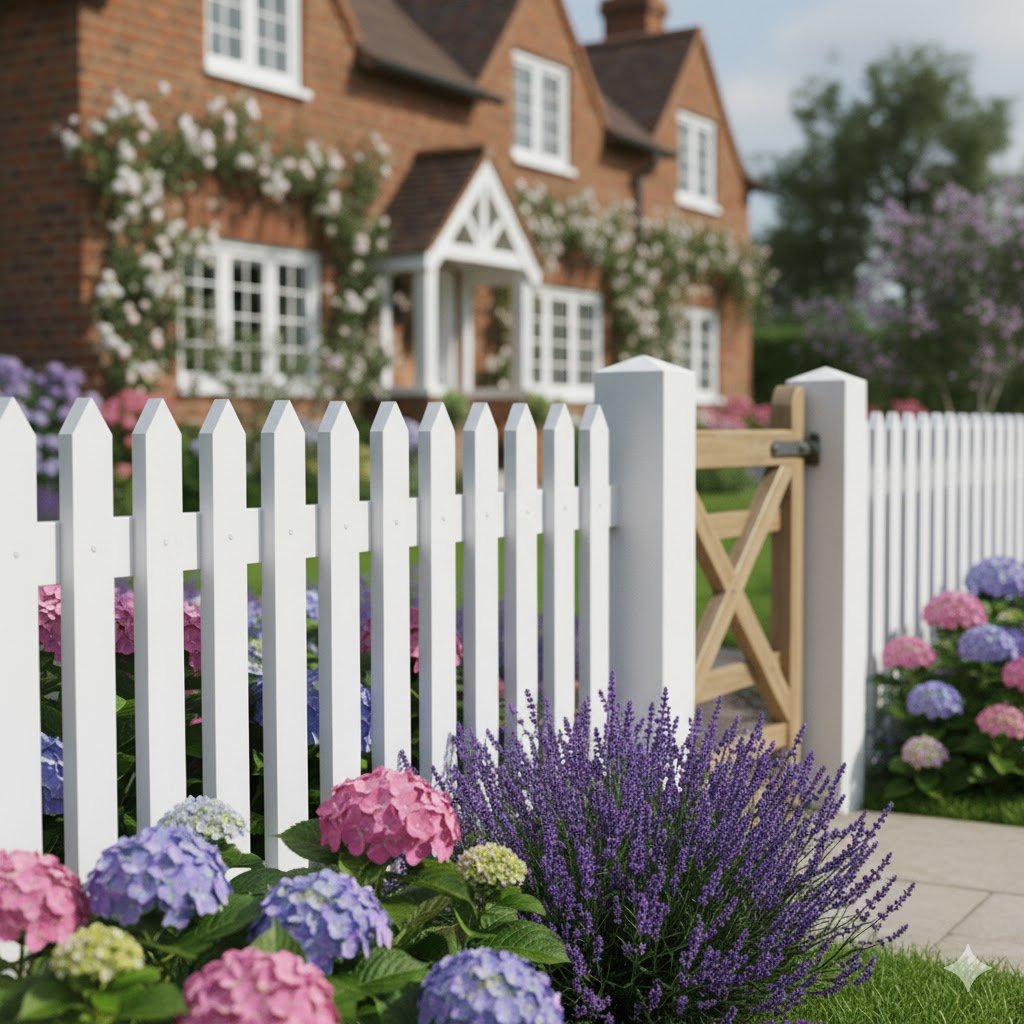
Picket fencing
The traditional front-garden fence: pales with gaps between them on two rails, usually 0.9 to 1.2 metres high. It marks the boundary without hiding the house, which suits period streets and the 1 metre limit that usually applies next to a road. Pointed, rounded or flat tops, painted or stained.
- Traditional pointed or rounded picket tops
- Natural, stained or painted white finish
- Various picket widths and spacing options
- Ideal for front gardens and low-level boundaries
- Matching gates built from the same pales
- Pressure-treated timber for durability outdoors
- Height options from 600mm to 1.2m typically
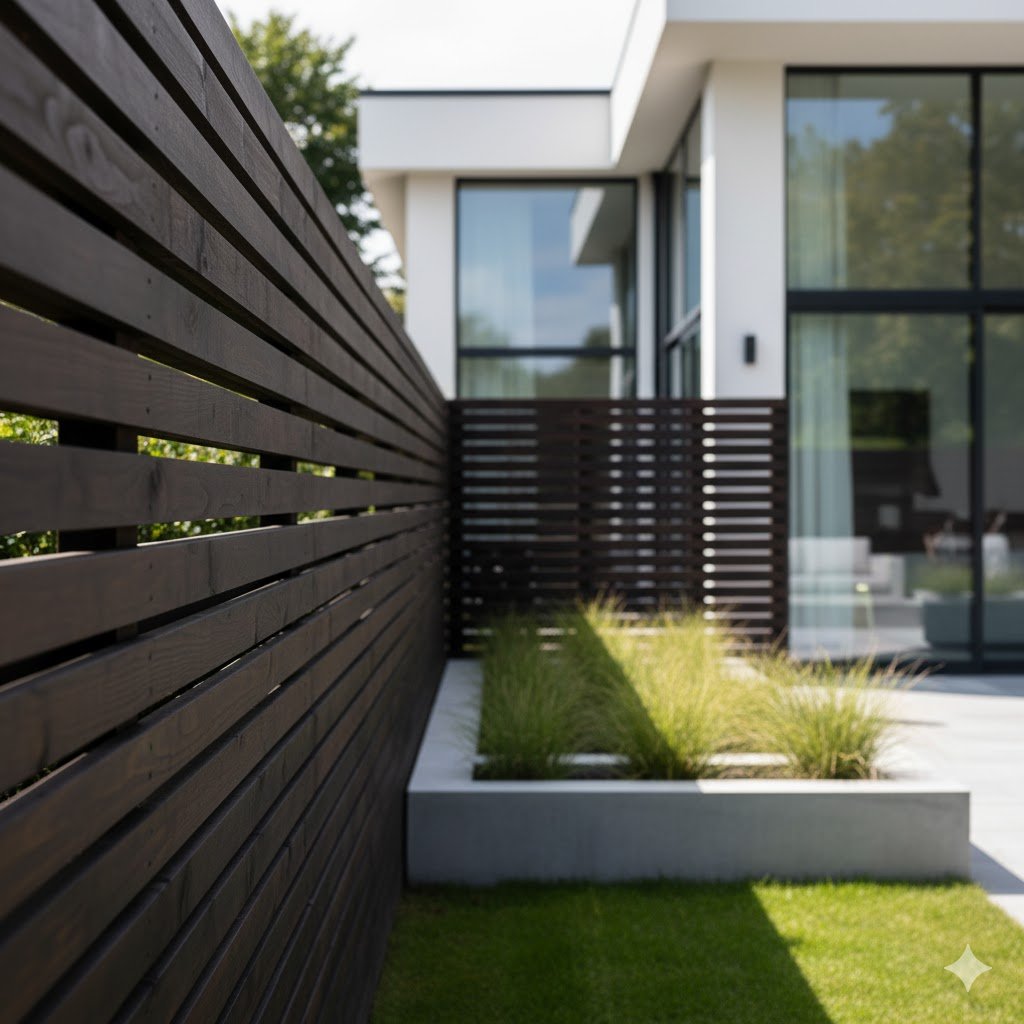
Horizontal batten fencing
Horizontal slats fixed across the face of the posts with a set gap between them. The gap decides how private it is, from nearly solid to a light screen. It is the usual choice for new-build and renovated houses, and it depends on a dead-straight post line, because any lean shows along every board.
- Clean horizontal lines for contemporary houses
- Gap between slats chosen to suit, from 0mm to 40mm
- Choice of timber species — pine, cedar, hardwood
- Natural, stained or oiled finish options
- Ideal for new-build and contemporary gardens
- Steel posts available for a slimmer look
- Can be combined with planting along the run
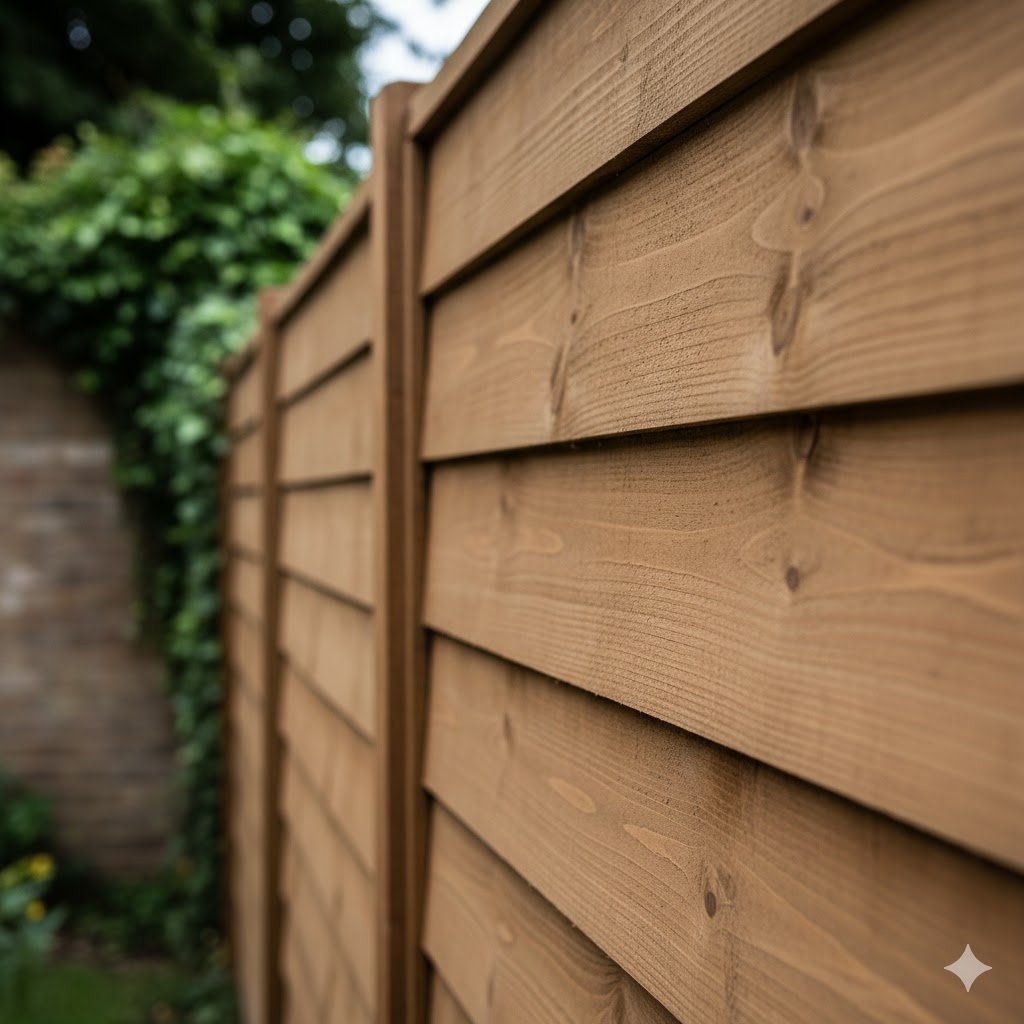
Overlap fence panels
Ready-made panels of thin overlapping slats, fitted between posts. They are the most economical solid fence and suit sheltered boundaries between gardens. How long they last depends on what is underneath: posts set to the right depth, and a gravel board keeping the bottom slats off the soil.
- The economical choice for a solid fence
- Panel heights from 3ft to 6ft (900mm–1.83m)
- Gravel boards included to protect from ground moisture
- Concrete or timber post options
- Solid privacy as soon as the panels are in
- Quick to put up once the posts are set
- Natural or pressure-treated timber available

Jackson fencing panels
Decorative panels with a solid lower section and a lattice or slatted trellis along the top. The trellis lets light through, takes some of the wind load and gives climbing plants something to grow on. Often used on side passages and as dividers within a garden.
- Decorative lattice or trellis top section
- Solid lower section for privacy and security
- Distinctive style for front gardens and side passages
- Pressure-treated timber for weather resistance
- Can be painted or stained to complement your property
- The trellis top supports climbing plants
- Available with matching gate options
Additional fencing services
The smaller jobs that keep a fence standing, and the ones that finish it off.
Fence repairs
Storm damage, rotten posts and broken rails on any type of fence. We match the existing timber where we can, and tell you first if a repair is not worth doing.
Fence repair in detail → Storm-damaged fences →Staining and finishing
An exterior stain or preservative on new or weathered timber. It evens out the colour where sections have been repaired and helps protect the wood from weathering.
Custom designs
A fence that is not one of the standard types: mixed materials, a particular board pattern, decorative post caps or a boundary shaped around something awkward. We say at the survey what is practical.
Fence removal
Old fencing and its concrete post bases taken out and taken away, as part of a replacement or on its own. You do not need to arrange a skip.
Gates and entrances
Side access, garden and driveway gates in timber, built to match the fence and hung on posts heavy enough to stop them dropping.
Garden gates in detail →Maintenance plans
A yearly visit to check the posts, re-treat the timber and fix small faults before they spread.
Choosing a fence, answered
The questions that decide which of these fences goes in, answered the way we would answer them on site.
Closeboard is built on site: vertical feather-edge boards are nailed one at a time to arris rails between posts. Overlap arrives as ready-made panels of thin horizontal slats that slot between the posts. Closeboard is stronger in wind, can follow a slope, and a damaged board can be swapped on its own. Overlap costs less to buy and fit, but in a gale the whole panel acts as one sail, and a broken panel is replaced as a unit.
A pressure-treated softwood fence on properly set posts commonly lasts 15 to 20 years. What shortens it is almost always at ground level: posts set too shallow, and boards sitting directly on wet soil. A gravel board along the bottom and end-grain preservative on every cut made on site are the two cheapest ways to add years.
A gravel board is a plank of timber or concrete fitted along the bottom of the fence, so the boards or panels above never touch the soil. Timber rots fastest where it stays wet, which is the few inches at ground level. When the gravel board eventually goes it is cheap to replace, and a concrete one removes the problem entirely. We fit one on almost every fence we build.
Yes. There are two ways. A stepped fence keeps each bay level and drops it at every post, which leaves triangular gaps at the bottom that are filled with gravel boards. A raked fence follows the ground in a continuous line. Panels can only be stepped; closeboard can be raked, which is why it is usually the choice on a noticeable slope.
Closeboard gives full privacy with no gaps between boards, typically at 1.8 metres on a rear boundary. Horizontal batten fencing can be close to solid with narrow gaps, or more open with wider ones, so the gap is chosen to suit how private the garden needs to be. Picket and trellis-topped fencing are for boundaries meant to be seen over rather than hidden behind.
Tell us about
your boundary
We cover all London areas including North London, Barnet, Enfield, Haringey, Muswell Hill and Finchley. Request your free estimate today — we usually respond within 24 hours and site visits are free of charge.