Picket fencing
The traditional front-garden fence: vertical pales with gaps between them, fixed to two rails. It marks the boundary without hiding the house, which is what most Victorian and Edwardian streets in London were built with.
About picket fencing
A picket fence is meant to be seen over. It keeps small children and dogs in and shows where the garden ends, while leaving the front of the house in view from the street. On a front boundary that is usually what the planning rules want too: next to a road, or a footpath alongside one, a fence over 1 metre generally needs permission.
Because it sits on show at the front, a picket fence is judged on its lines. Pales at even spacing, tops at a consistent height and a straight top rail matter here in a way they never do on a closeboard fence at the back of a garden.
- Usual height0.9m to 1.2m
- LookOpen, gaps between pales
- TopsPointed, round or flat
- FinishPainted or stained
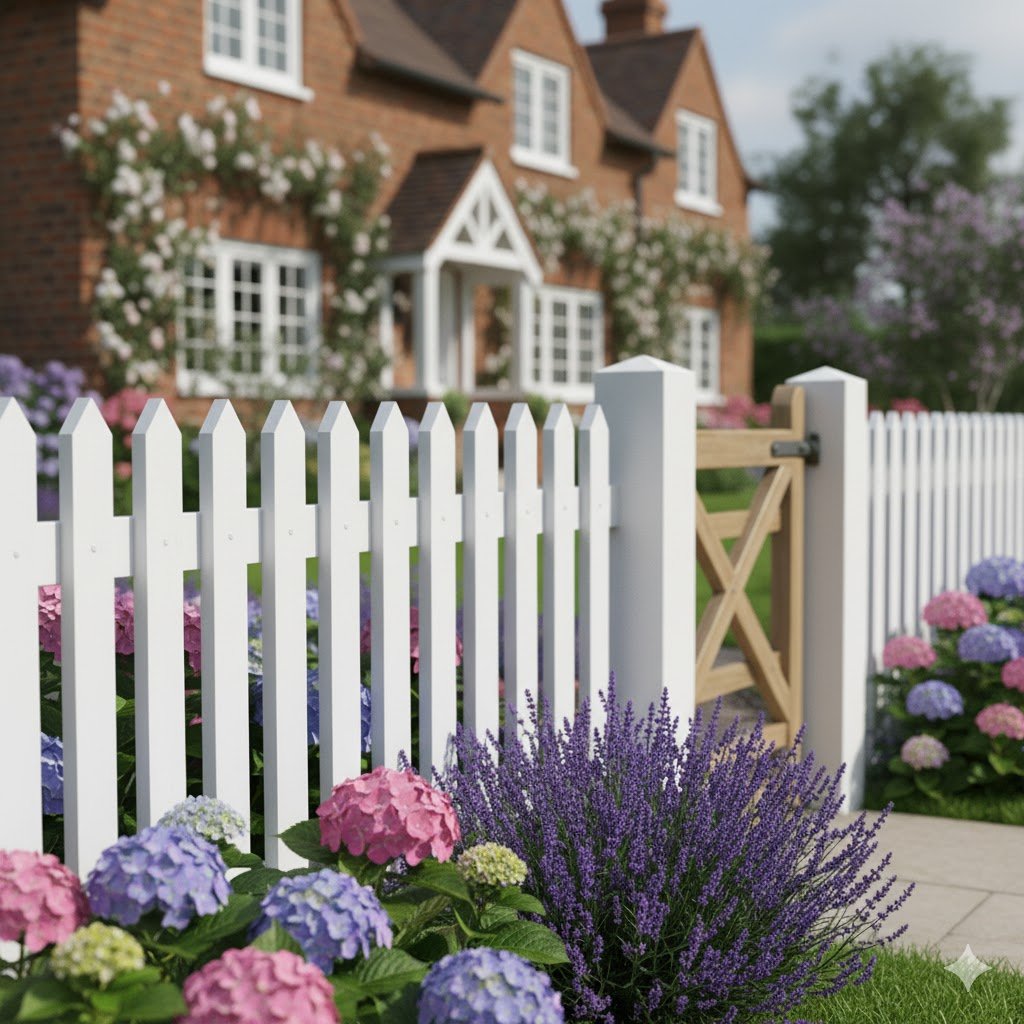
How a picket fence is built
A low fence on proper foundations
Front fences sit on the most exposed line of the property, within reach of car doors, bins and deliveries. The posts are set in concrete even though the fence is low, and gate posts are heavier than the rest because they carry a swinging load.
Set out before anything is fixed
The pales are spaced out along the whole run before any are nailed, so the gaps come out even rather than ending in a narrow sliver at the last post.
Pointed, rounded or flat
Pointed tops shed rain off the end grain; rounded and gothic tops are more decorative; flat tops suit a plainer street. Many London streets already have a pattern, and matching the neighbours usually looks best.
Paint or stain
Paint is traditional and gives the crispest look, but it shows wear and needs recoating every few years. A stain or natural finish fades more evenly and asks for less upkeep.
Is it the right choice?
We would rather point you to the right job than the bigger one. This is how we would advise on site.
Choose it for
- Front gardens and period houses
- Keeping children and dogs in without closing off the house
- Streets where the neighbouring fences are already picket
- Low boundaries alongside paths and borders
Think twice if
- Any boundary where you want privacy: see closeboard or horizontal battens
- Conservation areas, until you have checked what the council expects on front boundaries
Picket fencing, answered
Usually 1 metre, including the posts, where the fence is next to a road used by vehicles or a footpath alongside one, unless you have planning permission. Away from a road the limit is 2 metres. Listed buildings, conservation areas and Article 4 directions can be stricter, so check with your council before choosing a height.
Yes. A gate made from the same pales and rails as the fence, hung on a heavier post, is usually the neatest finish. The gate is braced so it does not drop at the latch side over time.
Both last if the timber is pressure-treated and the posts are set properly. Paint gives the sharpest look but needs recoating every few years; a stain or natural finish weathers more evenly and is easier to keep up.
Related work
We work across London, with local pages for Barnet, Enfield, Finchley, Muswell Hill, Wood Green, Haringey, Camden, Hackney, Clapham, Wimbledon. See all areas we cover.
Get a written estimate
We measure the run, check the posts, the ground and the access, then put an itemised figure in writing. The visit and the estimate are free, and we reply within 24 hours.