Horizontal batten fencing
Horizontal slats with a set gap between them, fixed across the face of the posts. It is the contemporary fence, popular on new-build and renovated properties, and it lets you choose how private the boundary is by choosing the gap.
About horizontal batten fencing
A batten fence is judged by its lines. Every board runs the full distance between posts, so a post that leans or sits a few millimetres out shows along the whole run, in a way a vertical fence would hide. That is why most of the work is in setting the posts, not fixing the boards.
The gap sets the character. Close-fitted boards give privacy close to a solid fence; wider gaps let light and air through and make a small garden feel less enclosed. Wind passes through the gaps as well, which takes some load off the posts.
- LookClean horizontal lines
- GapChosen, 0 to 40mm
- PostsTimber or steel
- Critical partA straight post line
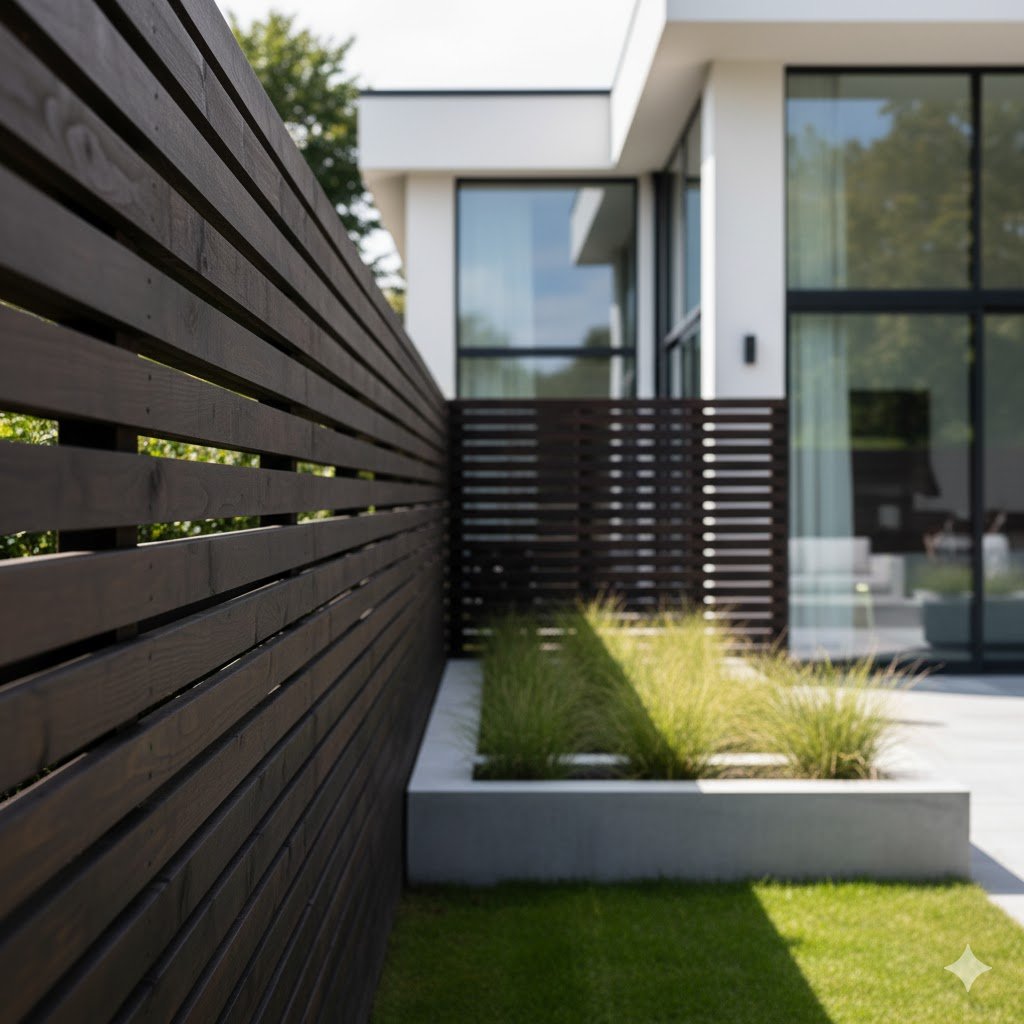
How a batten fence is built
Set to a line and a level
Posts are set to a taut string line so their faces align along the whole run. They are closer together than on a closeboard fence because each board has to span between them without sagging.
Spaced with a gauge
A spacer between each board keeps the gap identical from bottom to top. On long runs the board joints land on posts so they read as intentional.
Screws that will not stain
Fixings should be stainless or coated. Plain steel reacts with some timbers, cedar in particular, and leaves dark streaks running down from every screw.
A capping to finish
A capping board across the top hides the board ends, keeps rain off them and gives the fence a finished edge.
Is it the right choice?
We would rather point you to the right job than the bigger one. This is how we would advise on site.
Choose it for
- New-build and contemporary houses
- Small urban gardens where a solid fence would feel enclosed
- Screening a seating area while keeping some light
- Owners who want to choose exactly how private the boundary is
Think twice if
- A solid boundary on the tightest budget: closeboard is usually the more economical way to full privacy
- A period front boundary, where picket usually suits the street better
Horizontal batten fencing, answered
It depends what the fence is for. Gaps of a few millimetres give near-full privacy; gaps of 20 to 40 millimetres give a lighter, more open screen. Look through a sample at eye level from where you sit in the garden before deciding, because the viewing angle changes how private it feels.
Yes, but it is stepped rather than raked. Each bay is kept level and the fence steps down at the posts. Raking horizontal boards would make every line run downhill, which usually looks wrong on a fence built for its straight lines.
Pressure-treated softwood is the economical choice and can be stained any colour. Cedar is naturally durable and weathers to silver-grey if left untreated. Hardwoods are heavier and harder-wearing. Any of them can go on timber or steel posts.
Related work
We work across London, with local pages for Barnet, Enfield, Finchley, Muswell Hill, Wood Green, Haringey, Camden, Hackney, Clapham, Wimbledon. See all areas we cover.
Get a written estimate
We measure the run, check the posts, the ground and the access, then put an itemised figure in writing. The visit and the estimate are free, and we reply within 24 hours.